Most building construction technology purchases fail because someone bought the platform before fixing the process it was supposed to speed up. Software does not cure a bad RFI routine or a sloppy takeoff habit. It makes both faster and more visible.
If you run jobs, the useful question is narrow: which tools remove a specific hour of rework or paperwork from your week? Start there, and ignore the rest of the pitch.
Start With the Hour You Are Losing
Pick one recurring time sink before you price anything. Chasing the latest drawing set, re-keying daily logs, and re-measuring plans for change orders are the usual three.
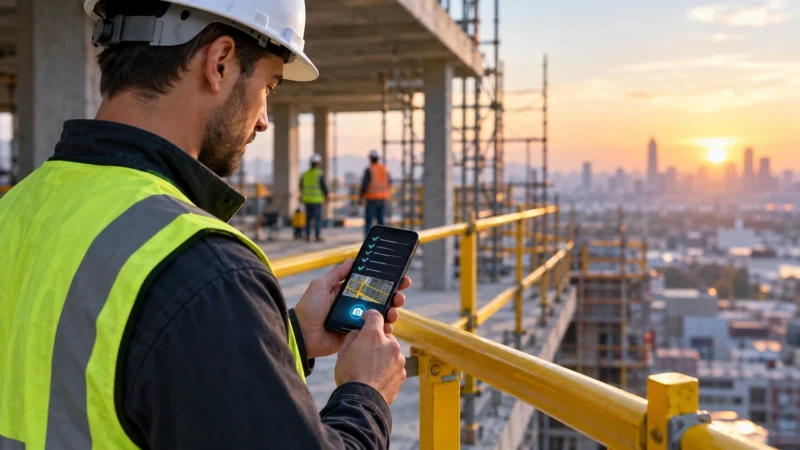
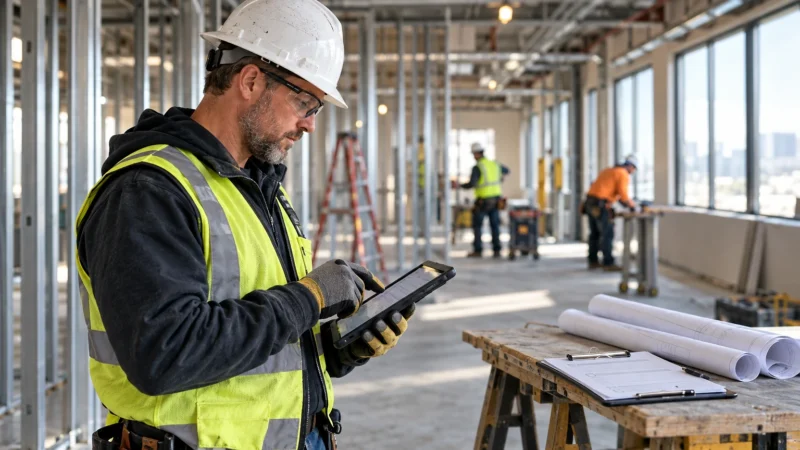
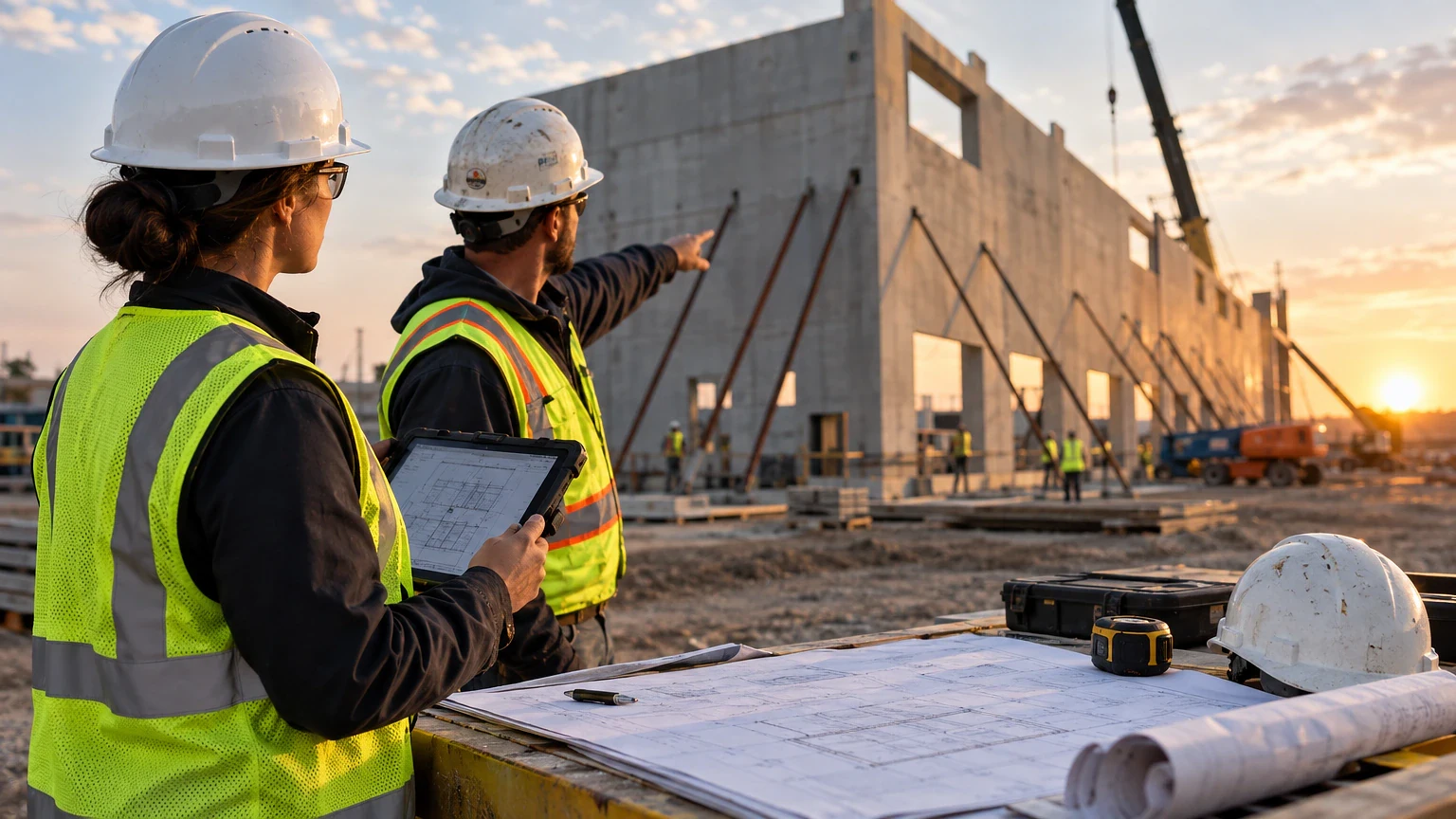
Say you run a 12,000 sq ft tilt-up warehouse with a superintendent and two foremen. Each foreman spends about 40 minutes a day writing logs by hand. A tablet form that pre-fills weather, crew count, and delivery data can cut that sharply. Over a 30-week schedule, the saved hours are real labor you were already paying for.
Write the loss down in hours per week. That number becomes your test later, and without it every demo looks impressive.
Five Categories of Building Construction Technology Worth Knowing
Most tools fall into a handful of buckets. Know which one your problem belongs to before you take a sales call.
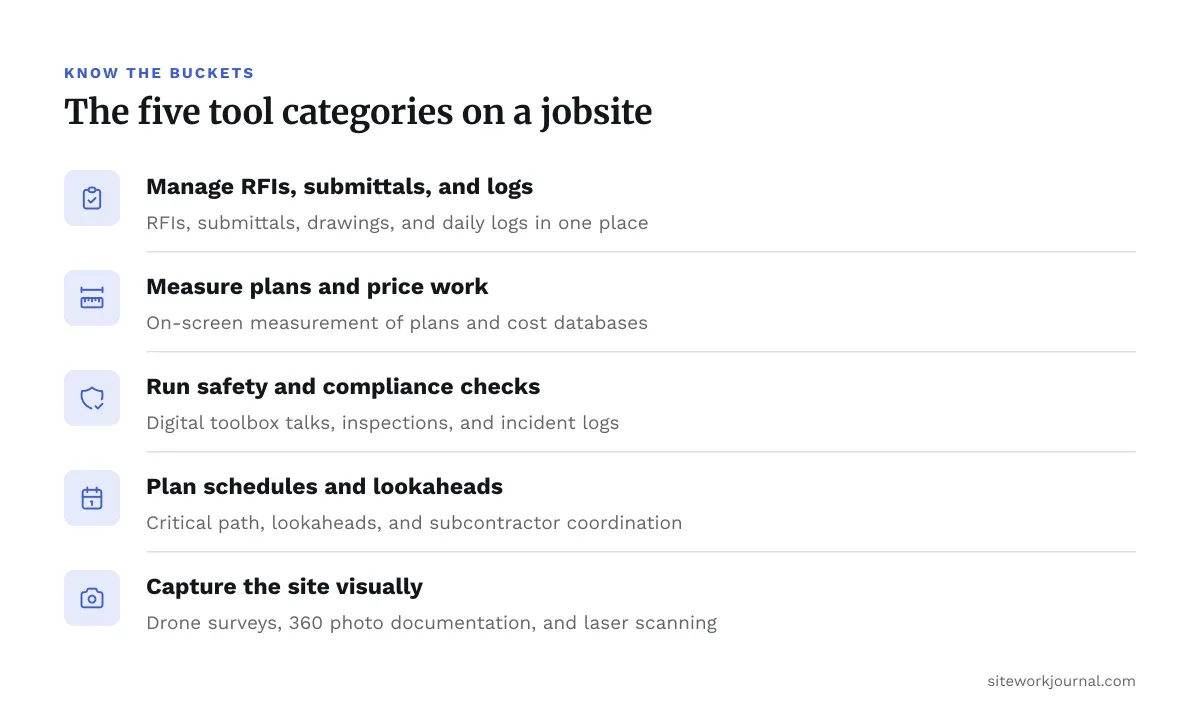
- Project management platforms. RFIs, submittals, drawings, and daily logs in one place.
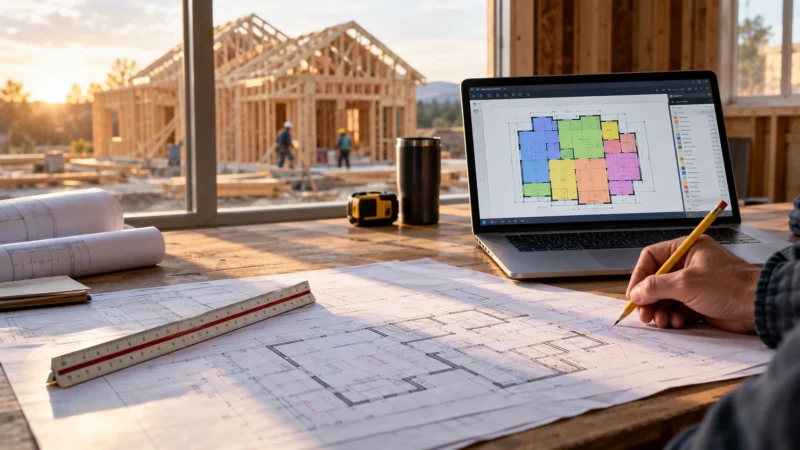
- Takeoff and estimating software. On-screen measurement of plans and cost databases.
- Field safety and compliance tools. Digital toolbox talks, inspections, and incident logs.
- Scheduling tools. Critical path, lookaheads, and subcontractor coordination.
- Site capture. Drone surveys, 360 photo documentation, and laser scanning.
You rarely need all five. A 15-person framing contractor likely needs takeoff plus a lean field app. A GC running $40M in annual volume needs the platform and the scheduling layer to talk to each other.
Compare Building Construction Technology Platforms Honestly
Pricing in this category is mostly quote-based, which makes comparison hard. Here is what holds up, using figures published on each vendor’s pricing page.
| Tool | Best at | Weak spot | Pricing model |
|---|---|---|---|
| Procore | Full project lifecycle for mid-size and large GCs | Heavy setup, overkill for small crews | Custom quote based on annual construction volume |
| HammerTech | Site safety, inductions, and compliance | Not a general project management tool | Custom quote; HammerTech GO scales by annual construction revenue |
| Bluebeam Revu | PDF markup and takeoff | No built-in project management | Per-seat subscription |
| Fieldwire | Task and plan management for field crews | Thinner financial tools | Free tier, then paid per-user plans |
Procore earns its place on larger jobs where owners and architects already use it. It punishes small teams with a long onboarding curve. HammerTech does one job well, safety and compliance, and you will pair it with something else for RFIs and drawings.
Ask every vendor for a written quote with the number of projects and users stated. Verbal ballparks vanish after the demo.
How to Pilot New Building Construction Technology Without Burning a Job
Never roll new software across all your projects at once. Test it on one job with a superintendent who wants it.
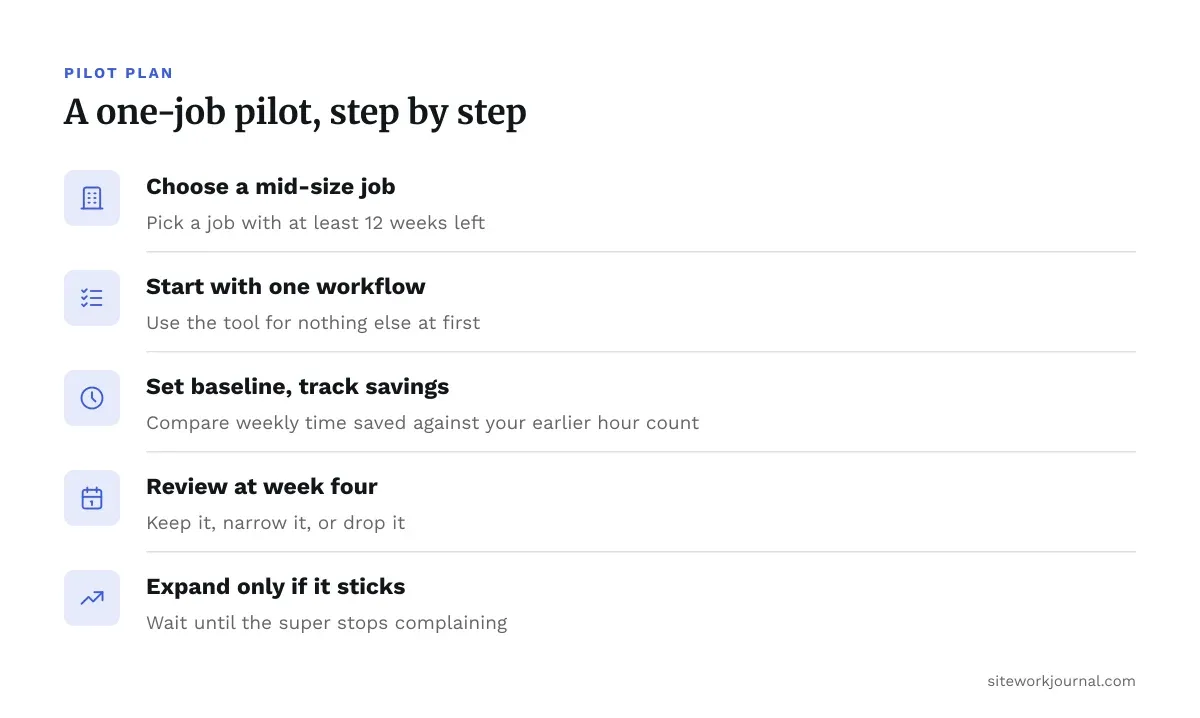
Follow this sequence:
- Choose a mid-size job with at least 12 weeks left, so the crew has time to learn the tool without a deadline crushing it.
- Pick one workflow, such as daily logs, and use the tool for nothing else at first.
- Set the baseline from your earlier hour count, then track weekly time saved.
- Hold a 20-minute review at week four. Keep it, narrow it, or drop it.
- Only expand after the first workflow runs without the super complaining.
Subcontractors are where pilots die. If your electrical sub will not open the app, the data never gets entered. Get their buy-in before launch, and write the app use into your subcontract language. Have a construction attorney review that clause, since contract terms are theirs to judge.
Takeoff and Estimating Tools: Built for the Person Doing the Takeoff
If you build the bid, your tool must measure fast and reconcile against your own production rates. Rates vary by region and crew, so use yours, not a vendor’s default database.
Take a concrete slab takeoff. You measure 8,400 sq ft of 5-inch slab on grade, convert to cubic yards with waste, and price the pour. On-screen takeoff in Bluebeam or a dedicated estimating package gets that quantity in minutes. The danger is trusting the output without a sanity check. Always run a rough hand calculation on the biggest line items before the bid goes out.
Good takeoff software is bad at one thing: judgment. It will happily measure the wrong sheet or miss an addendum revision. Build a checklist step that confirms the drawing set date against the latest addendum before any quantity is final.
Where Building Construction Technology Meets Code and Compliance
Digital tools can track permits, inspection requests, and correction notices. They cannot interpret code or approve anything.
When a plan reviewer flags a detail, the fix is a conversation with your design team and the authority having jurisdiction (AHJ), not a software setting. The same goes for structural substitutions. If a supplier offers an alternate connector or engineered product, a licensed engineer signs off, not your field app and not a salesperson.
Use technology to keep the paper trail clean. Log every inspection request time, photograph every correction item, and store approved submittals where the whole crew can pull them. That record is what protects you if a dispute lands in front of a construction attorney later.
Quick Q&A: Is Drone Capture Worth It?
For most small and mid-size GCs, not as a first purchase. A drone earns its keep on large earthwork or roofing jobs where stockpile volumes and progress documentation change payment decisions. On a 3,000 sq ft tenant improvement, a phone and a good photo routine do the same work.
If you do buy one, check licensing rules for commercial flights before the first launch. Requirements are set by aviation authorities, so confirm with the official source rather than a vendor.
Choosing and Sticking With What You Buy
The best building construction technology is the one your field crew uses without being reminded. Pick the tool that fixes your measured time sink, pilot it on one job, and judge it on hours saved, not feature count. For a wider view of what has paid off for other contractors, see this rundown of construction technology that pays off on a jobsite.
Revisit the decision every year. Pricing models change, vendors get acquired, and your own project mix shifts. A tool that fit a $10M contractor may strain at $30M.
Technology never replaces a superintendent who reads the drawings or an estimator who checks the numbers. It just removes the clerical drag so those people can do their actual jobs.
Frequently asked questions
What is building construction technology?
It covers the software, hardware, and digital methods used to plan, price, build, and document a project. That includes project management platforms, takeoff software, safety apps, scheduling tools, and site capture like drones and 360 cameras.
How much does construction software cost?
It depends on the vendor. Procore and HammerTech both use custom quotes, with Procore pricing tied to annual construction volume and HammerTech GO scaling by annual construction revenue. Some tools like Fieldwire offer a free tier before paid plans. Get written quotes stating your user and project counts.
Should a small contractor buy a full project management platform?
Usually not at first. A crew under 15 people often does better with takeoff software and one lean field app. Move to a full platform when owners or architects require it, or when your RFI and submittal volume overwhelms email.
Can software approve code compliance or structural changes?
No. Software tracks permits and inspections, but code interpretation belongs to the AHJ and structural changes belong to a licensed engineer. Bring them in whenever a substitution or plan review comment touches life safety or structure.
How do I know a new tool is working?
Measure the hours you lose to a specific task before the pilot, then track the same number weekly afterward. If the time saved is not visible by week four, narrow the use or drop the tool. Keeping up with construction technology news helps you spot options worth testing next.